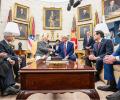
'The US has agreed to negotiate with us a mutually beneficial bilateral trade agreement, which will go for reduction of tariffs on both sides so that our trade can grow.'

'Investors should look to incrementally allocate towards equity from a medium-to-long term horizon.'

The Tata Group is one of the very few Indian MNCs which has carved out a niche in China's highly competitive market, notes Rup Narayan Das.
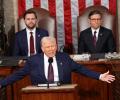
Trump has made it clear to Prime Minister Modi that India will not be spared from Washington's reciprocal tariffs and emphasised that "nobody can argue with me" on tariff structure.

'If weak indicators persist, there is a risk that India could slip into a prolonged slowdown similar to the one experienced between 2014 and 2019,' warns Debashis Basu.

India and the United States will finalize the contours, schedule of negotiations, and terms of reference for a proposed bilateral trade agreement (BTA) during a three-day meeting beginning Tuesday. The agreement is expected to be finalized in two tranches, with the first phase focusing on goods trade. The US team, led by Assistant US Trade Representative for South and Central Asia Brendan Lynch, will be in India from March 25-29 to discuss the agreement. Both countries are aiming to conclude the first phase of the agreement by fall 2025.

Snapping the two months slide, the country's merchandise exports rose marginally by 0.5 per cent to $34.58 billion in September while trade deficit narrowed to $20.78 billion. According to official data released on Wednesday, imports increased by 1.6 per cent to $55.36 billion in September compared to $54.49 billion in the year-ago period. The trade deficit, or the gap between imports and exports, was $20.8 billion during the same month last year.

The Fed interest rate decision, domestic macroeconomic data announcements and quarterly earnings will be the major sentiment drivers for the equity market in a holiday-shortened week ahead, analysts said. Investors will also take cues from the monthly auto sales numbers to be announced on Monday. Equity markets will remain closed on Thursday for Diwali Laxmi Pujan and on Friday for Diwali Balipratipada.

Automobile, apparel and electronics are among sectors that see a sales boost during the festival season, a time when investors expect gains in related stocks. This year could be different: Analysts have factored in all positives and do not expect such stocks to deliver lucrative returns. "Indian households spend across sectors like automobiles, consumer durables, and consumer staples during the festival season.

Pricing will be competitive, along the lines of the Maruti Celerio and the Hyundai Grand i10

Leading Indian electric two-wheeler (e2W) companies have said that "swapping" of batteries is currently unviable and will only increase the cost for a consumer to run the vehicle.
Among the 30 Sensex firms, Mahindra & Mahindra, IndusInd Bank, Bharti Airtel, Axis Bank, Tata Motors and ICICI Bank were the biggest laggards. In contrast, Tata Steel, Tata Consultancy Services, NTPC, JSW Steel, Asian Paints and Reliance Industries were gainers.

'The August phenomenon of decline in sales occurs every year.' 'What they have done cleverly is, using the economic slowdown as an excuse, they want a package from the government to compensate the expenditure they will incur while converting BS4 to BS6.' 'That's why they are making a hue and cry.'

Mixed earnings and not so encouraging macroeconomic data dented sentiment, Ajit Mishra, VP - Research, Religare Broking Ltd said. In twin blows to Indian economic revival, higher food prices drove retail inflation to a five-month high of 7.4 per cent, while factory output fell for the first time in 18 months. The second consecutive month of rise in consumer price index (CPI)-based inflation will add to the pressure on the Reserve Bank of India (RBI) to again raise interest rates to tame high prices. In the broader market, BSE Midcap declined 0.73 per cent while smallcap dropped 0.45 per cent.
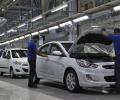
Automakers Maruti Suzuki, Tata Motors, Mahindra & Mahindra and Kia reported robust growth in their vehicle dispatches in the domestic market for August buoyed by festive demand and easing of semiconductor shortage woes. Other manufacturers like Hyundai, Toyota and Skoda also reported growth in wholesales in August as compared with the same month last year. The country's largest automaker Maruti Suzuki India said its domestic passenger vehicle dispatches increased by 30 per cent to 134,166 units in August as compared with 103,187 units in the year-ago month.

The previous two sessions have seen benchmark indices, the BSE Sensex and Nifty presenting signs of fatigue, reaching closer to its all-time highs level. Both indices are down approximately 1 per cent from recent highs and 2 per cent away from reaching a new peak. This has led to confusion on the street about its ability to reach another milestone. The present bullish trend in the leading indices; which has displayed smart recovery since late March this year, remains intact as the market breadth continues to stay elevated.

India will not tailor its policies to suit US EV maker Tesla, and its laws and tariff rules will be formulated to attract all-electric vehicle manufacturers from across the world to set up a base in the world's fastest-growing economy, Commerce and Industry Minister Piyush Goyal said. Tesla has been seeking an initial tariff concession that would allow it to offset 70 per cent customs duty for cars priced less than $40,000, and 100 per cent for cars of higher value.

During the meeting with Finance Minister Nirmala Sitharaman, the auto industry broadly presented factors such as issues regarding availability and affordability of financing, increasing cost of acquisition of vehicles and change in axle load capacity for commercial vehicles that have hurt demand.

'The path beyond diesel is not going to be clear. It is really going to be dependent on applications.'

koda Auto India is set to drive in a new car by the first half of next year to reach its target of 100,000 unit annual sales in the country by 2026. The compact sports utility vehicle (SUV) will be positioned against the likes of Maruti Brezza, Hyundai Venue, and Kia Sonet, and would be competitively priced, a senior company official said. koda will also export the car to right-hand-drive markets like Australia, New Zealand and the Asean nations.

Owing to the poor market conditions and tepid sentiments, the size of the show has shrunk compared to the last edition, which took place in 2018. A majority of the two-wheeler makers, and several car and commercial vehicle makers, have opted out of this year's show, which opens for the media on Wednesday.

Auto majors report positive sales figs for November.

Private consumption is back driven by festive spending, and the medium-term economic outlook remains bullish as the innate strength of the macro-fundamentals reasserts itself, the Reserve Bank Bulletin said on Wednesday. Global economic activity remained resilient during Q4:2024 amidst fragile confidence and rising protectionism, said an article on 'State of the Economy' published in the November Bulletin.

India is among the top three emerging markets in the wellness economy.

Amid a rush of sport utility vehicle sales, Volkswagen is betting on its premium mid-sized sedan - the Virtus - to gain market share in India. The Volkswagen Virtus is the second product under the India 2.0 project being developed on the MQB-A0 IN platform, with up to 95 per cent localisation levels. In February, the company registered an 84 per cent year-on-year growth in sales, primarily driving on the Taigun it launched last year.

There is another common trend among these three players - they are all registering a volume decline in a market that is expanding at over 8 per cent
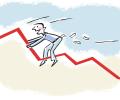
The recent stimulus measures announced by China have seen most analysts sit up and take notice.
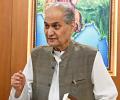
Rahul Bajaj, one of the most successful business leaders in the country, has finally decided to hang his boots at Bajaj Auto, the company he nurtured and steered to one of the leading firms in two and three-wheeler space. The non-executive chairman of the Pune-based two and three-wheeler maker has tendered his resignation which would come into effect from close of business hours on April 30, 2021, Bajaj Auto said in a regulatory filing. In place of Rahul Bajaj, the company has appointed Niraj Bajaj as chairman with effect from May 1, 2021, it added.

Its executives are test-marketing the model in New Delhi.

Sensex, Nifty slightly upbeat, midcaps to rule markets this week.

The automobile sector has started seeing volume growth, the crucial economy segment included. Maruti Suzuki India (MSIL) could be a big beneficiary as the country's largest passenger vehicle (PV) maker has seen several favourable developments including volume recovery. Demand for its new sports utility vehicles (SUVs) appears to be good, and the company has 4 lakh outstanding orders by April 2023, (up from 3.6 lakhs in January 2023). Siam (Society of Indian Automobile Manufacturers) estimates that passenger vehicle demand would grow by 5-7 per cent in the 2023-24 financial year (FY24) and MSIL is likely to beat the market growth.

The Cyberster is currently sold in the UK for about Rs 63 lakh and is expected to be priced between Rs 65 lakh and Rs 70 lakhs.

The Renault-Nissan alliance currently employs around 8,000 workers at its Chennai plant

'In 2022, active management, long-short strategies, multi-asset strategies, and asset allocation strategies need to be considered to meet long-term investment goals.'

PowerGrid was the top loser in the Sensex pack, shedding around 3 per cent, followed by Asian Paints, Axis Bank, Kotak Bank, Bajaj Auto, SBI and M&M.

In the Sensex pack, IndusInd Bank was the top gainer, soaring around 8 per cent, followed by Bajaj Finance, Axis Bank, PowerGrid, ONGC, ICICI Bank, Sun Pharma and M&M.

India is a market for low-priced cars with low running costs. The global majors don't have models that fit the bill; only Maruti and Hyundai have successful entry-level models, observes T N Ninan.
With Donald Trump all set to become US president, Indian exporters may face high customs duties for goods like automobiles, textiles and pharmaceuticals if the new US administration decides to pursue the 'America First' agenda, opined trade experts. Experts also said that Trump could also tighten H-1B visa rules, impacting costs and growth for Indian IT firms. Over 80 per cent of India's IT export earnings come from the US, making it vulnerable to changes in visa policies.

M&M was the biggest gainer on the Sensex chart, rising 5.97 per cent, followed by JSW Steel, Ultra Cement, Kotak Bank, ITC and NTPC. Reliance Industries gained 0.73 per cent to close at Rs 2,871 apiece. In contrast, TCS, HCL Tech, HUL, Nestle Industries, Bajaj Finserv, Wipro and Infosys were among the losers.
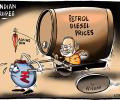
Price of international crude oil - the raw material for making petrol and diesel - dropped to a three-year low before marginally recovering but a revision in domestic petrol and diesel rates is likely only if lower rates are sustained, industry sources and officials said. Global oil benchmark Brent crude futures fell below $70 per barrel on Tuesday - the first time since December 2021 - but gained thereafter after Hurricane Francine hit crude supply in the Gulf of Mexico. Brent rose above $71 a barrel on Thursday while West Texas Intermediate advanced to trade near $68.
